
Kenosha County Arrest Sources
The official Kenosha County inmate inquiry is the first stop for a current county booking. It is run by the Sheriff. The detention system behind it handles intake, classification, housing, and court movement at two facilities. A row can follow an arrest by the Sheriff, Kenosha Police, Pleasant Prairie Police, or another agency. Arresting agency and booking agency are not always the same. A transfer or sentence-start event can also create a row, and so can a court-related intake. Booking time and listed agency matter for that reason.
Kenosha Police, Pleasant Prairie Police, and Salem Lakes publish no separate daily arrest feed. Salem Lakes contracts with the Sheriff for policing. The roster covers all three. It is the common current-custody route for each place. Someone just booked may not appear at once. A released person drops from the current view. Use the Daily Arrest Report for the same-day workflow and the Weekly Arrest Log for the longer archive.
| Window | Best source | Meaning |
|---|---|---|
| Current custody | Official inmate inquiry | Live roster; fields and photos can change |
| Newest visible events | County Eye | Hourly secondary mirror with a 48-hour caveat |
| Older events | County Eye archive | Secondary history from March 1, 2025 |
| Case outcome | WCCA | Court record, not the booking record |
Note: “Newest” means newly visible in the source, not proof that each row is a new criminal arrest.
Search Kenosha Arrest Records
Search an exact name first. Use a subject or inmate number when known. Then read the date, agency, listed charge, facility or status, and photo. Do that only when those fields appear. Never read a blank field as “none.” Live roster labels control over any summary of them. The County warns that roster data changes fast and is not intended for legal action. The displayed charge is the arresting agency’s charge at arrest. It may differ from the District Attorney’s final charge.
The County Eye is the best documented secondary search. It accepts a name or booking number. It has shown booking date and time, race, gender, height, weight, and a details link. The publisher says the mirror updates hourly and can be corrected for 48 hours. That suits discovery, not control. Check the Sheriff source again before relying on any custody status.
| Field | Use |
|---|---|
| Name | Try exact spelling and compare identifiers |
| Subject number | Use when an agency or prior record supplies it |
| Booking time | Separate one custody event from another |
| Arresting agency | Find the likely incident-record custodian |
| Listed charge | Read as an intake charge, not a conviction |
| Custody field | Current operations, not a legal conclusion |
When Kenosha Arrests Appear
No source promises a posting time in minutes. Intake can include identity work, printing, a photograph when taken, classification, data entry, and system transfer. The County Eye’s hourly cycle describes that publisher’s import, not the Sheriff roster’s schedule. Its 48-hour notice explains why an entry can change after first publication.
The 2025 Sheriff annual report gives scale. It counts 6,026 bookings and 5,974 releases. Average daily population was 699. Those figures cover movement through a two-facility operation. They cannot be divided into a sound daily-arrest rate, and a release count reveals nothing about any one case outcome.
A booking may lag online, change within two days, or reflect a transfer. Confirm urgent custody questions with the roster or jail.
Where Kenosha Arrests Get Published
Official sources lead because they own the current record. News sites can help find a name or date. But they may crop photos or keep old entries. They can also miss corrections or show a field after the government page changes.
| Channel | Status | Role |
|---|---|---|
| County inmate inquiry | Official | Current roster and photo when published |
| Sheriff | Official | Roster link and detention contacts |
| County Eye | Local news | Hourly mirror and archive |
| Kenosha News | Journalism | Stories, not a complete roster |
| Private booking sites | Unofficial | Discovery only; retention varies |
The successful manifest capture of the official Sheriff page shows the government starting point.
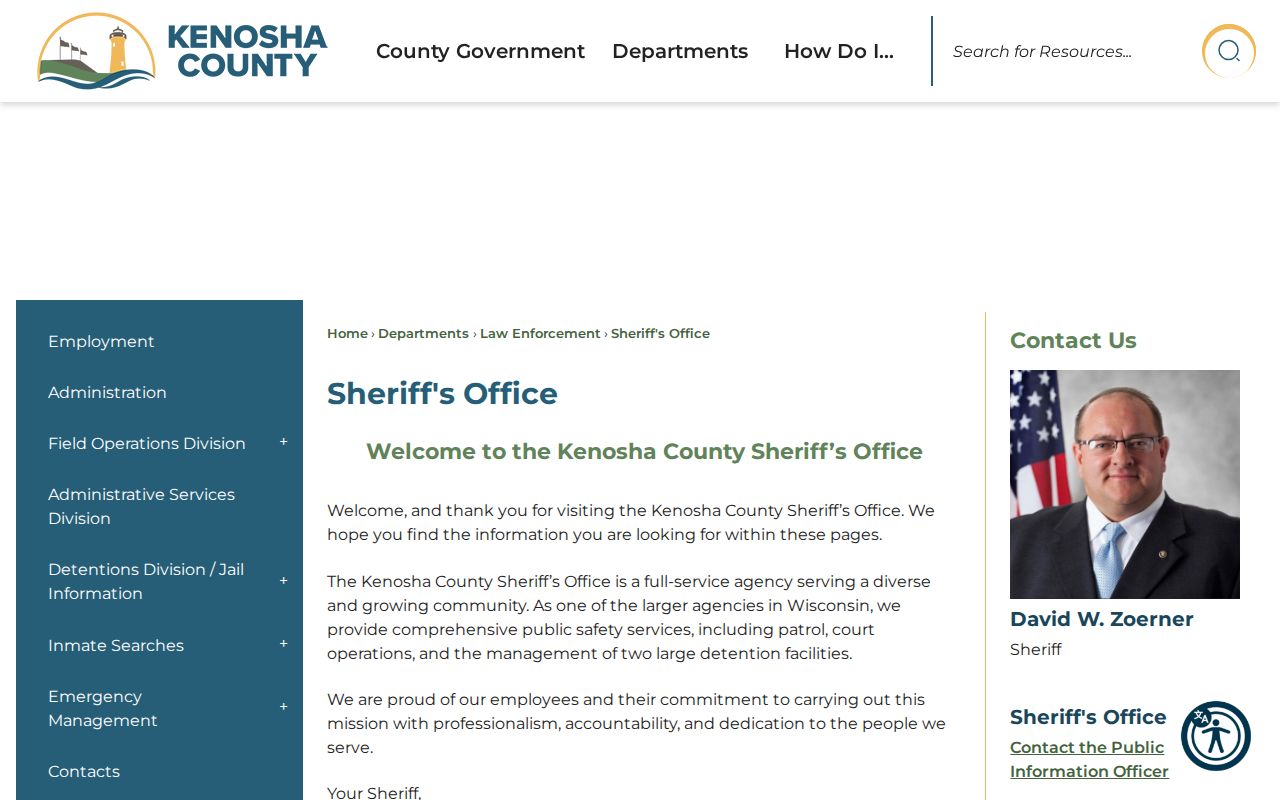
The roster linked by that page remains the live authority for a named booking.
Kenosha County Arrests by City
Local structure decides which office holds the incident report. The jail route stays shared. In Kenosha, KPD creates police records while the Sheriff runs detention. Pleasant Prairie Police has a Records Bureau and selected news releases but publishes no daily booking feed. Salem Lakes uses Sheriff contract policing. Its municipal court handles ordinance forfeitures, not criminal cases.
- Kenosha Recent Arrests covers KPD records, KJS media, and county booking.
- Pleasant Prairie Recent Arrests covers its Records Bureau and county detention.
- Salem Lakes Recent Arrests covers contract policing and circuit court.
The city list follows Wisconsin’s 2024 municipal estimates. It does not rank crime or arrest volume.
Kenosha Booking Record Fields
A Kenosha booking record starts when someone is processed into the jail. It can list the person's name, booking time, an identifying number, physical description, and the arresting agency. Bond or release details, court dates, and facility information may appear too, along with the booking photo. What the public sees varies, since the record is not the same as a criminal-history report or the court docket.
| Field | What it shows |
|---|---|
| Name and subject number | Identity used in the jail system |
| Booking date | When custody processing began |
| Arresting agency | Agency that supplied the charge |
| Listed charge | Accusation at intake, which can change |
| Bond or release | Published terms when present |
| Photo | Identification image, not evidence of guilt |
The court record tells the rest of the story. It holds the later details a booking entry never shows.
Kenosha Arrest Mugshots and Photos
A Kenosha County booking photo is an identification image created by the arresting agency. County Eye reported in October 2025 that the Sheriff's inquiry grew from low-resolution thumbnails to full-resolution mugshots. The live official inquiry controls what appears today. Access can shrink for several reasons. Juvenile status, protected-person status, an active investigation, privacy, safety, or a custodian's own decision can each close the door.
The KJS digital-media form covers photographs, yet the Sheriff and KPD stay custodians of their own media stored by KJS. Name the person, booking date, subject number, agency, facility, and the exact image you want. KJS can route a request. Release is never promised.
Wisconsin posts no broad statewide mugshot mandate. There is no general anti-pay-to-remove law either. Section 165.84 covers fingerprinting and photographs in defined cases, not universal online publication. Private sites may keep an image after the official view changes, so treat them as secondary, and no paid removal service is endorsed.
Request Kenosha Arrest Records
Wisconsin Statute section 19.35 backs inspection and copying, within legal and balancing-test limits. State law sets no single response deadline. An authority must answer as soon as practicable, with speed matched to the request's scope. Narrow wording helps staff locate an existing record.
- Give the full name, booking range, agency, and subject or incident number.
- Ask the actual custodian for the booking sheet, photo, or incident report.
- For stored digital media, use the KJS form and name the owning agency.
- Request digital delivery and a fee estimate before work begins.
- For a denial or redaction, ask for its stated legal basis.
The Sheriff's main line is 262-605-5100. The Pre-Trial Facility answers at 262-605-5111, KJS lists 262-605-5042 and digitalrequests@kenoshajs.org, and phone staff may explain procedure, though the written response is the durable answer.
Kenosha Arrest Removal Rules
Removal can mean four different things. It might mean correcting the state repository, asking the Sheriff to drop a roster item, seeking court expungement, or using a publisher's own correction policy. Before the Sheriff will consider Inmate Search removal, the County requires proof from the Wisconsin DOJ Crime Information Bureau that fingerprints left the state repository. The County says removal is not legally required. Consideration is not approval.
The DOJ guide describes form DJ-LE-250B. It fits a person released without charge or cleared through court proceedings on all charges tied to that event, and lists no DOJ fee. Court expungement runs on a separate track. The guide says a conviction stays in the repository even after a court record is expunged. RecentlyBooked and Busted Newspaper offer free request forms under their own rules, which bind neither the County nor other sites. Skip anyone selling paid universal deletion.
Local records sit under section 19.21 and approved schedules. A row leaving the web proves nothing about destruction. Kenosha lists no booking-photo retention term, so ask the custodian which schedule applies.
Kenosha County Arrest Warrants
Kenosha County has no countywide warrant portal. No current most-wanted gallery exists either. A warrant is a court order that authorizes an arrest. It is not a booking. An old mugshot never proves someone is wanted now. For verification, search the Wisconsin circuit court system and ask the Clerk of Courts for the proper route. The Sheriff can explain its own procedure, but never approach someone based on a web result; use 911 for emergencies and a verified channel for tips.
After a Kenosha County Arrest
The booking source shows who entered custody. Court records show what happened next. An initial appearance is the first hearing, where charges may be read and bail or conditions weighed. A felony preliminary hearing tests probable cause. Arraignment is the formal charge-and-plea stage. The District Attorney can reduce or dismiss charges, and sentencing follows a plea or supporting finding.
Search WCCA by name, county, or case number. Then use the Clerk for the official file. A fresh booking may not match a case yet, protected matters may not display, spellings differ, and the final charge may not match the booking label.
The manifest image from the official WCCA page shows the court search in action.
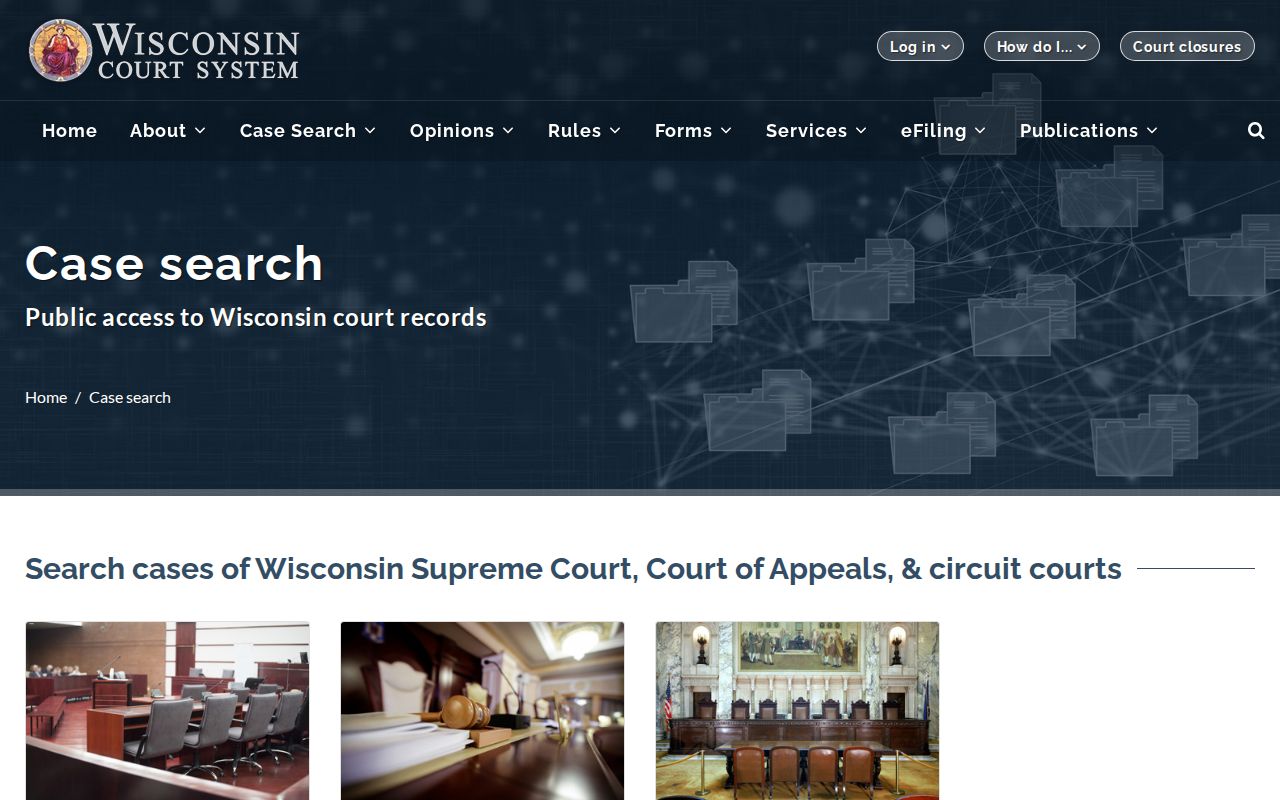
WCCA supplies later case history, while the Sheriff source remains the intake record.
Kenosha Arrest Custody Changes
Custody status shifts fast in Kenosha County, and no single system tracks every stage. Wisconsin VINE watches county jail custody and sends alerts, though it stores no booking photos and no court docket. For that route, the VINELink Inmate Check walks through the steps. A state sentence works differently. The Wisconsin DOC route applies once someone transfers into the state prison system, and DOC records say nothing about a fresh county arrest. Federal time runs through BOP. ICE keeps its own locator plus DHS-VINE, and even the USMS detainees noted in the county annual report stay outside the local roster.
- Booking
- Intake processing into detention.
- Bond
- A release condition, not guilt.
- Disposition
- The court’s recorded resolution.
- Expungement
- A limited court process, not deletion everywhere.
Kenosha County Detention Facilities
The Detentions Division runs two sites in Kenosha County. The Pre-Trial Facility sits at 927 54th Street, Kenosha, WI 53140, reachable at 262-605-5111. The Detention Center sits at 4777 88th Avenue, Kenosha, WI 53144, with phone 262-605-5800. According to the county, the division handles intake, booking, classification, housing, and court movement for people arrested here.
A building's name tells you little on its own. Someone housed at either site may be sentenced, awaiting trial, or held on a writ, and the status shown in the source is the only one to rely on. Annual report numbers describe operations over time. They are not a live headcount.
Can a person be arrested but never show up in these facilities? Yes. A citation and release, a transfer to another authority, or handling without a county jail booking all skip these walls. When a name is missing, ask the arresting agency.
Kenosha Arrest Records Over Time
How long do Kenosha arrest records stick around? A jail roster, a booking sheet, a court docket, and a news story about an arrest each live on different clocks. Wisconsin's retention rules, built on section 19.21 and approved schedules, set the baseline. State guidance tells local agencies to keep records for at least seven years unless a shorter period gets approved. No Kenosha-specific schedule covers booking photos, though. So the general rule can't promise how long any one image stays on file.
Want an older Kenosha arrest record? Put the date range, the agency, the person's name, and the exact document in writing. Ask where the item sits now. It might live in jail software, KJS evidence storage, paper files, backups, or a deep archive. Ask which schedule governs it. The Wisconsin Historical Society accepts records of permanent value. That still doesn't mean a specific Kenosha booking photo was ever sent there or can be searched.
Does a deleted roster row mean the arrest record is gone? No. The public roster is a convenience view. An agency can keep the underlying file while a newspaper or private site holds its own copy of the same booking.
Kenosha Federal Record Searches
Federal lookups work differently from a Kenosha County arrest search. The BOP locator finds sentenced federal prisoners by name or register number. It may show location and release details. It is not a source of county booking photos. ICE's locator takes an A-number plus country of birth. It also accepts exact biographical fields. Neither Kenosha facility publishes a dedicated ICE contract roster.
USMS detainees do get housed in the local detention operation, as the annual report shows. But USMS runs no person-by-person Kenosha booking feed. Match the locator to the custody type you already know. Never read federal or immigration status out of a local booking entry.
Kenosha County Sheriff’s Office Location and Directions
Public Record Search
Sponsored Results