
Kenosha Arrest Log Sources
The Sheriff posts no page it calls a weekly or multi-day arrest blotter. The best local archive is the Kenosha County Eye booking page. Its records start March 1, 2025, and pages of booking events run back from there. You can search by name or booking number. Each result card carries a date and a details link. Just remember it is news media, not government.
For anyone possibly still in custody, use the official inmate inquiry. The two tools answer different questions. A release or transfer drops a person from the current roster. The archive row stays put. The mirror posts a warning. Entries can be corrected for 48 hours. Some rows cover sentence starts, transfers, or court events rather than a new arrest.
| Source | Best use | Limit |
|---|---|---|
| Official roster | Current custody | Volatile and not a full archive |
| County Eye | Multi-day and older discovery | Unofficial; starts March 1, 2025 |
| Agency news | Incident context | Selective, not a complete log |
| WCCA | Later court procedure | Not the intake record |
| Records request | Underlying agency record | Custodian review and fees may apply |
Read Kenosha Arrest Log Entries
A Kenosha archive search works best when it moves from broad to precise. Start with a name plus a date range. Then chase down the agency that actually owns the arrest record. Booking numbers help. The same name can show up more than once in the results. Also note who made the arrest. Not every Kenosha County booking started with the Sheriff. Keep any correction notice from the archive attached to whatever you save.
- Search the County Eye archive by name or booking number and narrow the visible date range.
- Open the detail and record the booking time, number, physical descriptors, and listed agency only as displayed.
- Check the current Sheriff roster if custody is still relevant.
- Search WCCA for a later court case, using careful identity matching.
- Ask the arresting agency or Sheriff custodian for the underlying record when the archive is insufficient.
A same-day Kenosha arrest check still has its place. The daily page tracks fresh arrests and publication delays. This log serves a different job: paging through date ranges, older bookings, and corrections.
Kenosha Arrest Log Fields
The County Eye display shows names, booking dates and times, race, gender, height, weight, and a details link. Search controls cover name and booking number. Private Kenosha arrest sites sometimes go further. They may add charges, agency fields, age, booking photos, or day counts. Extra columns prove nothing about official status. For who is in custody right now, the government roster's own labels win.
| Archive field | What it can establish |
|---|---|
| Name | The identity label used by that publisher |
| Booking number | A useful event identifier when present |
| Date and time | Published intake or custody-event timing |
| Physical description | Displayed matching information, subject to correction |
| Agency or charge | Intake information, not final prosecution |
| Photo | Custody identification |
A blank field means just that: blank. The bond amount, photo, or charge may be missing, redacted, left off the mirror, or held by a different custodian in Kenosha County.
Kenosha Arrest Archive Scale
The Sheriff's 2025 annual report puts the operation in perspective. Kenosha County logged 6,026 bookings and 5,974 releases that year. The two detention facilities held an average of 699 people daily. Add monthly USMS inmate counts, which averaged 34. That volume keeps the archive moving. It says nothing about crime trends or how many distinct people were arrested in Kenosha County. A single booking can mean many things. Intake, transfer, remand, a sentence start, or a federal hold all land in the same ledger. One person can trigger several events, and releases flow out through several doors. So treat these totals as context for the archive. Never treat them as a count of unique arrests.
Annual booking totals describe detention operations. They cannot be converted into a count of unique Kenosha County arrests or guilt findings.
Kenosha Weekend Arrest Patterns
No county office promises a weekend-only arrest report or confirms a recurring surge. The local jail mirror refreshes hourly. Rows can still lag behind real events, since a booking at 2 a.m. may post hours later. Holidays can thin records-office staffing. Automated systems may keep running anyway.
For a Friday-through-Monday sweep of Kenosha County recent arrests, trust timestamps over page position. A Sunday row might come from a Saturday arrest. It could also be a transfer posted late. If a detail looks off, wait out the mirror's 48-hour correction window. Then cross-check the official roster and the court source.
Note: A busy page does not prove a weekend crime increase because bookings include more than new arrests.
Kenosha Charges and Court Outcomes
The county posts a plain warning next to its roster: charges listed at booking come straight from the arresting agency. The District Attorney may file something different later. An archived booking page can keep showing the original label long after the case moves on. Check the display date and the source before trusting any charge line.
For court results, start with WCCA, the public circuit-court search. The Clerk of Courts holds the full file. A new case can take days to appear after a Kenosha County arrest, and juvenile or protected cases stay hidden from public view. Read the disposition field and the court dates there. The Kenosha County Clerk of Courts page is the official route to those court records.
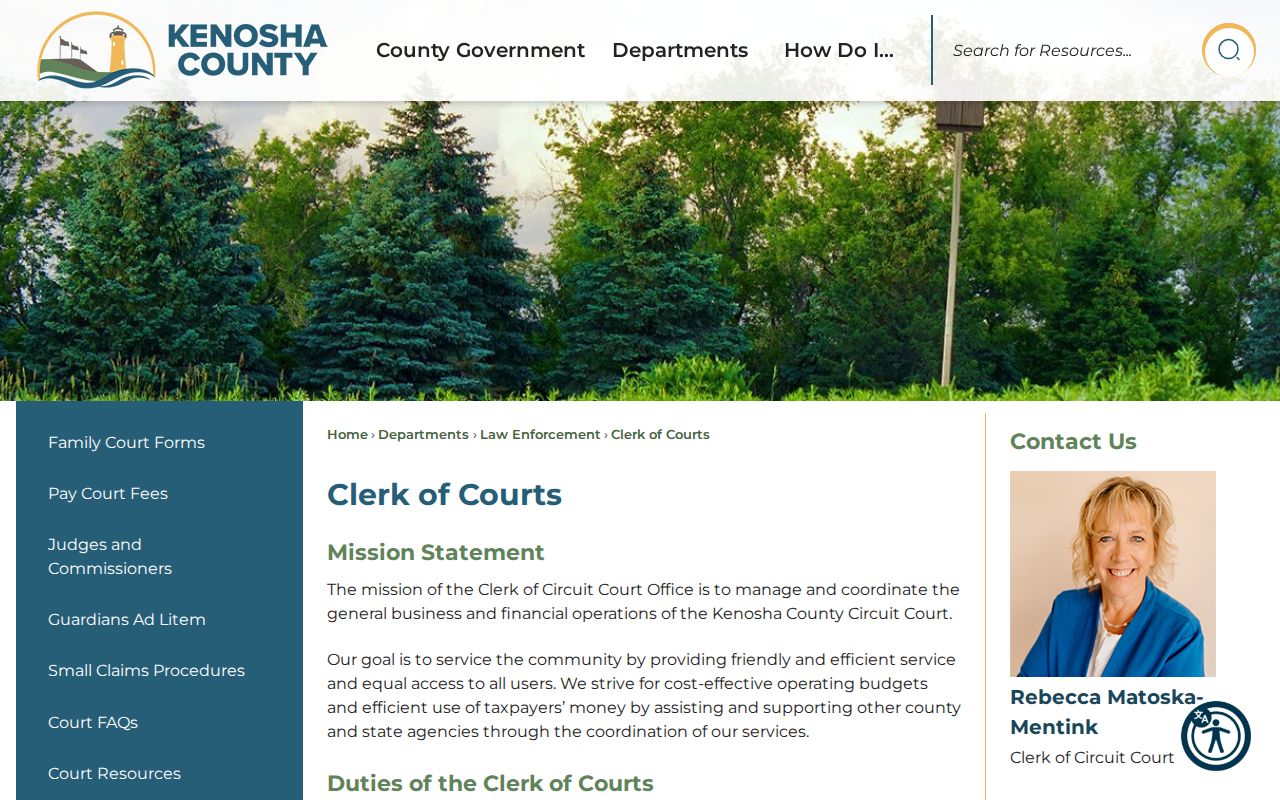
The Clerk keeps the later court case file, not the booking log from the arrest itself.
Kenosha News Arrest Coverage
Local news gives Kenosha readers a different window on arrests. Kenosha News runs story-based reporting, and Kenosha.com covers much of the same ground. Regional TV stations chip in on bigger incidents. For a dated feed, Pleasant Prairie Police keeps a police and fire news-release archive. An RSS option comes with it. Kenosha Police posts agency information and releases on its own site.
A news article can carry details a booking record never shows. Think agency statements, incident context, or updates as a case develops. Still, none of this adds up to a full Kenosha County arrest log. Note the article date. Chase down any official release it cites. Let WCCA handle the later court record.

The news landing page offers solid reporting context. It is not, however, an official or complete Kenosha arrest log.
Older Kenosha Arrest Records
Private sites add historical leads for Kenosha County arrests. RecentlyBooked shows a last-30-days view. Arrests.org has filters. Busted Newspaper has older numbered pages. Kenosha Busted advertises a subject-number search, and Mugshots.com holds a large historical county path. Retention, provenance, corrections, and update schedules all differ from site to site. Treat each as unofficial.
Want the underlying record? Write to the legal custodian. Include the name, booking date range, agency, case or subject number, and the exact record type you need. Wisconsin law sets no fixed response deadline, only that replies come as soon as practicable and without delay. Ask for a fee estimate and digital delivery before work starts.
State retention law and approved schedules govern agency files. No Kenosha-specific booking-photo retention term appears in statute, so ask the Sheriff, KJS, or another custodian which schedule applies. A private archive page is not the official historical record. If an entry vanishes from the web, that alone proves nothing about destruction.
Kenosha Arrest Log Accuracy
Use archives with restraint. A booking photograph shows a person in a custody process at one moment. Transfers, amendments, dismissals, and acquittals can all follow later. Keep your sources separate for a dependable chronology. Pull the booking time from the detention record, and take incident facts from the arresting agency. Filing and disposition come from the court. Current custody status comes from the Sheriff or VINE. Blend them into one claim only when identity and dates line up.
An archive entry can be stale, corrected, or incomplete. Always confirm against the current official record and the later court disposition.
Public Record Search
Sponsored Results